
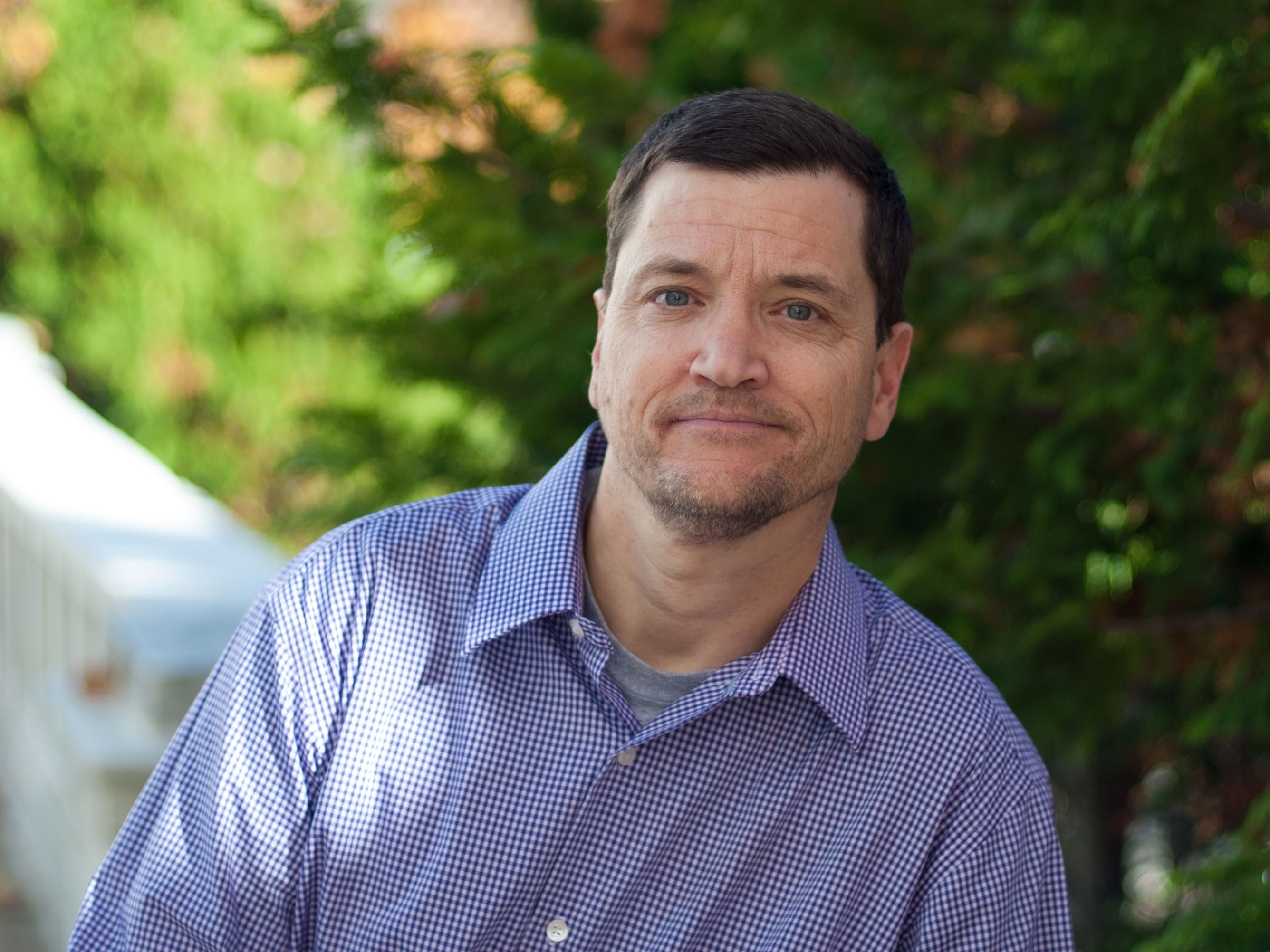
Steven Gygi, Ph.D.

Steven Gygi, Ph.D.

Professor of Cell Biology (HMS)
C-523C

Steven Gygi, Ph.D., received his Ph.D. from the University of Utah in Pharmacology and Toxicology performing small molecule mass spectrometry.  He went on to pursue postdoctoral work with Ruedi Aebersold at the University of Washington in 1996.  A revolution in biological mass spectrometry was occurring which allowed for the measurement of protein expression levels and a new field, Proteomics, was born.  In 2000, Dr. Gygi moved to Harvard Medical School and joined the Department of Cell Biology.  Currently, he is the faculty director of two MS core facilities (Taplin Biological MS Facility, and the Thermo Fisher Center for Multiplexed Proteomics—TCMP@HMS).

Research in the Gygi lab centers around developing and applying new technologies in the field of mass spectrometry-based proteomics.  These include the systematic and proteome-wide measurements of many protein properties including their expression levels, modification states, structure, localization, function, and interactions.  For example, the Gygi lab, together with the Harper lab at HMS, is creating a genome-scale map of the protein-protein interaction landscape in cells (termed BioPlex).  In addition, sample multiplexing techniques like Tandem Mass Tags (TMT) are being improved to allow up to 16 proteomics samples to be analyzed simultaneously using high resolution mass spectrometry.

Harvard Medical School

Dept. of Cell Biology, C-523B

240 Longwood Avenue

Boston, MA 02115

GCN5-mediated transcriptional control of the metabolic coactivator PGC-1beta through lysine acetylation.
Authors: Authors: Kelly TJ, Lerin C, Haas W, Gygi SP, Puigserver P.
J Biol Chem
View full abstract on Pubmed
Defining the human deubiquitinating enzyme interaction landscape.
Authors: Authors: Sowa ME, Bennett EJ, Gygi SP, Harper JW.
Cell
View full abstract on Pubmed
TAK1 is an essential regulator of BMP signalling in cartilage.
Authors: Authors: Shim JH, Greenblatt MB, Xie M, Schneider MD, Zou W, Zhai B, Gygi S, Glimcher LH.
EMBO J
View full abstract on Pubmed
A site-specific, multiplexed kinase activity assay using stable-isotope dilution and high-resolution mass spectrometry.
Authors: Authors: Yu Y, Anjum R, Kubota K, Rush J, Villen J, Gygi SP.
Proc Natl Acad Sci U S A
View full abstract on Pubmed
Mammalian BTBD12/SLX4 assembles a Holliday junction resolvase and is required for DNA repair.
Authors: Authors: Svendsen JM, Smogorzewska A, Sowa ME, O'Connell BC, Gygi SP, Elledge SJ, Harper JW.
Cell
View full abstract on Pubmed
S5a promotes protein degradation by blocking synthesis of nondegradable forked ubiquitin chains.
Authors: Authors: Kim HT, Kim KP, Uchiki T, Gygi SP, Goldberg AL.
EMBO J
View full abstract on Pubmed
Oxygen-regulated beta(2)-adrenergic receptor hydroxylation by EGLN3 and ubiquitylation by pVHL.
Authors: Authors: Xie L, Xiao K, Whalen EJ, Forrester MT, Freeman RS, Fong G, Gygi SP, Lefkowitz RJ, Stamler JS.
Sci Signal
View full abstract on Pubmed
MURC/Cavin-4 and cavin family members form tissue-specific caveolar complexes.
Authors: Authors: Bastiani M, Liu L, Hill MM, Jedrychowski MP, Nixon SJ, Lo HP, Abankwa D, Luetterforst R, Fernandez-Rojo M, Breen MR, Gygi SP, Vinten J, Walser PJ, North KN, Hancock JF, Pilch PF, Parton RG.
J Cell Biol
View full abstract on Pubmed
During muscle atrophy, thick, but not thin, filament components are degraded by MuRF1-dependent ubiquitylation.
Authors: Authors: Cohen S, Brault JJ, Gygi SP, Glass DJ, Valenzuela DM, Gartner C, Latres E, Goldberg AL.
J Cell Biol
View full abstract on Pubmed
Chaperone-mediated pathway of proteasome regulatory particle assembly.
Authors: Authors: Roelofs J, Park S, Haas W, Tian G, McAllister FE, Huo Y, Lee BH, Zhang F, Shi Y, Gygi SP, Finley D.
Nature
View full abstract on Pubmed