
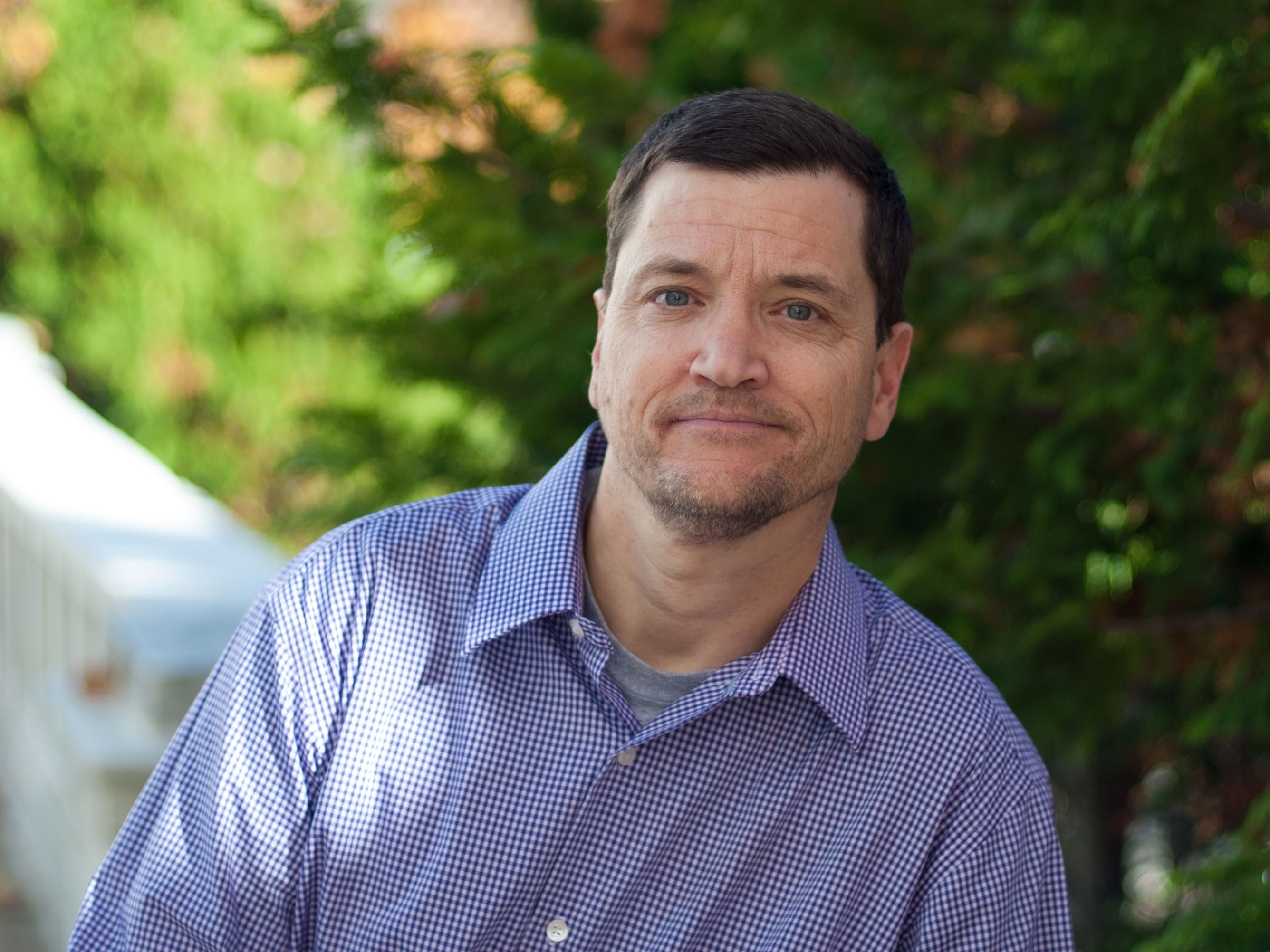
Steven Gygi, Ph.D.

Steven Gygi, Ph.D.

Professor of Cell Biology (HMS)
C-523C

Steven Gygi, Ph.D., received his Ph.D. from the University of Utah in Pharmacology and Toxicology performing small molecule mass spectrometry.  He went on to pursue postdoctoral work with Ruedi Aebersold at the University of Washington in 1996.  A revolution in biological mass spectrometry was occurring which allowed for the measurement of protein expression levels and a new field, Proteomics, was born.  In 2000, Dr. Gygi moved to Harvard Medical School and joined the Department of Cell Biology.  Currently, he is the faculty director of two MS core facilities (Taplin Biological MS Facility, and the Thermo Fisher Center for Multiplexed Proteomics—TCMP@HMS).

Research in the Gygi lab centers around developing and applying new technologies in the field of mass spectrometry-based proteomics.  These include the systematic and proteome-wide measurements of many protein properties including their expression levels, modification states, structure, localization, function, and interactions.  For example, the Gygi lab, together with the Harper lab at HMS, is creating a genome-scale map of the protein-protein interaction landscape in cells (termed BioPlex).  In addition, sample multiplexing techniques like Tandem Mass Tags (TMT) are being improved to allow up to 16 proteomics samples to be analyzed simultaneously using high resolution mass spectrometry.

Harvard Medical School

Dept. of Cell Biology, C-523B

240 Longwood Avenue

Boston, MA 02115

Chaperone-mediated pathway of proteasome regulatory particle assembly.
Authors: Authors: Roelofs J, Park S, Haas W, Tian G, McAllister FE, Huo Y, Lee BH, Zhang F, Shi Y, Gygi SP, Finley D.
Nature
View full abstract on Pubmed
p90 ribosomal S6 kinase and p70 ribosomal S6 kinase link phosphorylation of the eukaryotic chaperonin containing TCP-1 to growth factor, insulin, and nutrient signaling.
Authors: Authors: Abe Y, Yoon SO, Kubota K, Mendoza MC, Gygi SP, Blenis J.
J Biol Chem
View full abstract on Pubmed
The ubiquitin-interacting motif protein, S5a, is ubiquitinated by all types of ubiquitin ligases by a mechanism different from typical substrate recognition.
Authors: Authors: Uchiki T, Kim HT, Zhai B, Gygi SP, Johnston JA, O'Bryan JP, Goldberg AL.
J Biol Chem
View full abstract on Pubmed
Regulation of neuronal cell death by MST1-FOXO1 signaling.
Authors: Authors: Yuan Z, Lehtinen MK, Merlo P, Villén J, Gygi S, Bonni A.
J Biol Chem
View full abstract on Pubmed
A conserved CCCH-type zinc finger protein regulates mRNA nuclear adenylation and export.
Authors: Authors: Hurt JA, Obar RA, Zhai B, Farny NG, Gygi SP, Silver PA.
J Cell Biol
View full abstract on Pubmed
Isolation of mammalian 26S proteasomes and p97/VCP complexes using the ubiquitin-like domain from HHR23B reveals novel proteasome-associated proteins.
Authors: Authors: Besche HC, Haas W, Gygi SP, Goldberg AL.
Biochemistry
View full abstract on Pubmed
UAF1 is a subunit of multiple deubiquitinating enzyme complexes.
Authors: Authors: Cohn MA, Kee Y, Haas W, Gygi SP, D'Andrea AD.
J Biol Chem
View full abstract on Pubmed
HP1 proteins form distinct complexes and mediate heterochromatic gene silencing by nonoverlapping mechanisms.
Authors: Authors: Motamedi MR, Hong EJ, Li X, Gerber S, Denison C, Gygi S, Moazed D.
Mol Cell
View full abstract on Pubmed
Mass spectrometric analysis of type 1 inositol 1,4,5-trisphosphate receptor ubiquitination.
Authors: Authors: Sliter DA, Kubota K, Kirkpatrick DS, Alzayady KJ, Gygi SP, Wojcikiewicz RJ.
J Biol Chem
View full abstract on Pubmed
Role for perinuclear chromosome tethering in maintenance of genome stability.
Authors: Authors: Mekhail K, Seebacher J, Gygi SP, Moazed D.
Nature
View full abstract on Pubmed