
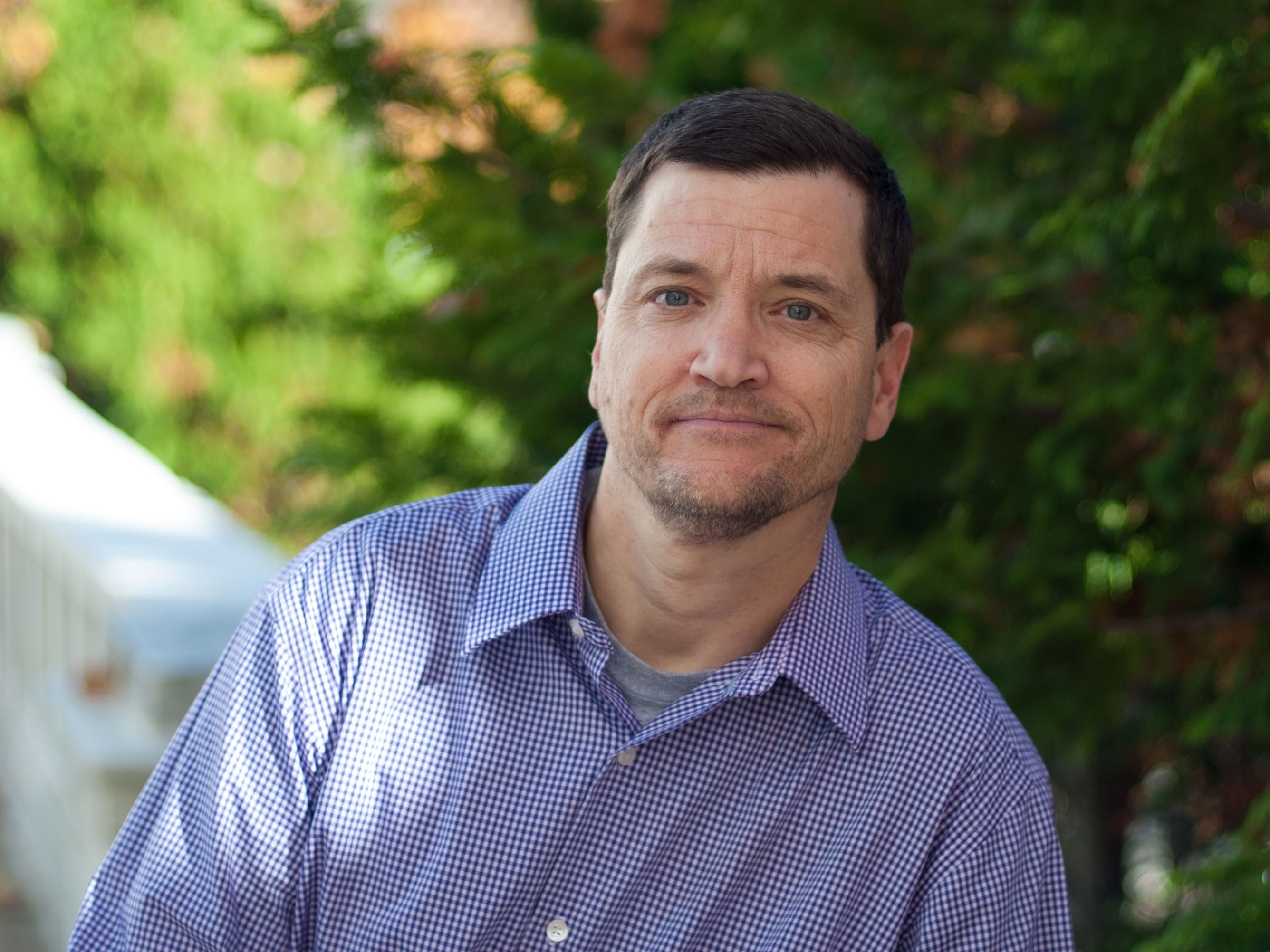
Steven Gygi, Ph.D.

Steven Gygi, Ph.D.

Professor of Cell Biology (HMS)
C-523C

Steven Gygi, Ph.D., received his Ph.D. from the University of Utah in Pharmacology and Toxicology performing small molecule mass spectrometry.  He went on to pursue postdoctoral work with Ruedi Aebersold at the University of Washington in 1996.  A revolution in biological mass spectrometry was occurring which allowed for the measurement of protein expression levels and a new field, Proteomics, was born.  In 2000, Dr. Gygi moved to Harvard Medical School and joined the Department of Cell Biology.  Currently, he is the faculty director of two MS core facilities (Taplin Biological MS Facility, and the Thermo Fisher Center for Multiplexed Proteomics—TCMP@HMS).

Research in the Gygi lab centers around developing and applying new technologies in the field of mass spectrometry-based proteomics.  These include the systematic and proteome-wide measurements of many protein properties including their expression levels, modification states, structure, localization, function, and interactions.  For example, the Gygi lab, together with the Harper lab at HMS, is creating a genome-scale map of the protein-protein interaction landscape in cells (termed BioPlex).  In addition, sample multiplexing techniques like Tandem Mass Tags (TMT) are being improved to allow up to 16 proteomics samples to be analyzed simultaneously using high resolution mass spectrometry.

Harvard Medical School

Dept. of Cell Biology, C-523B

240 Longwood Avenue

Boston, MA 02115

A proteomic strategy for gaining insights into protein sumoylation in yeast.
Authors: Authors: Denison C, Rudner AD, Gerber SA, Bakalarski CE, Moazed D, Gygi SP.
Mol Cell Proteomics
View full abstract on Pubmed
Photochromic agents as tools for protein structure study: lapachenole is a photoaffinity ligand of cytochrome P450 3A4.
Authors: Authors: Gartner CA, Wen B, Wan J, Becker RS, Jones G, Gygi SP, Nelson SD.
Biochemistry
View full abstract on Pubmed
Proteomic insights into ubiquitin and ubiquitin-like proteins.
Authors: Authors: Denison C, Kirkpatrick DS, Gygi SP.
Curr Opin Chem Biol
View full abstract on Pubmed
Quantitative phosphorylation profiling of the ERK/p90 ribosomal S6 kinase-signaling cassette and its targets, the tuberous sclerosis tumor suppressors.
Authors: Authors: Ballif BA, Roux PP, Gerber SA, MacKeigan JP, Blenis J, Gygi SP.
Proc Natl Acad Sci U S A
View full abstract on Pubmed
A cullin E3 ubiquitin ligase complex associates with Rik1 and the Clr4 histone H3-K9 methyltransferase and is required for RNAi-mediated heterochromatin formation.
Authors: Authors: Hong EJ, Villén J, Gerace EL, Gygi SP, Moazed D.
RNA Biol
View full abstract on Pubmed
Two RNAi complexes, RITS and RDRC, physically interact and localize to noncoding centromeric RNAs.
Authors: Authors: Motamedi MR, Verdel A, Colmenares SU, Gerber SA, Gygi SP, Moazed D.
Cell
View full abstract on Pubmed
Purification of active TFIID from Saccharomyces cerevisiae. Extensive promoter contacts and co-activator function.
Authors: Authors: Auty R, Steen H, Myers LC, Persinger J, Bartholomew B, Gygi SP, Buratowski S.
J Biol Chem
View full abstract on Pubmed
CD22 is a functional ligand for SH2 domain-containing protein-tyrosine phosphatase-1 in primary T cells.
Authors: Authors: Sathish JG, Walters J, Luo JC, Johnson KG, Leroy FG, Brennan P, Kim KP, Gygi SP, Neel BG, Matthews RJ.
J Biol Chem
View full abstract on Pubmed
Phosphoproteomic analysis of the developing mouse brain.
Authors: Authors: Ballif BA, Villén J, Beausoleil SA, Schwartz D, Gygi SP.
Mol Cell Proteomics
View full abstract on Pubmed
BRCA1-dependent ubiquitination of gamma-tubulin regulates centrosome number.
Authors: Authors: Starita LM, Machida Y, Sankaran S, Elias JE, Griffin K, Schlegel BP, Gygi SP, Parvin JD.
Mol Cell Biol
View full abstract on Pubmed