
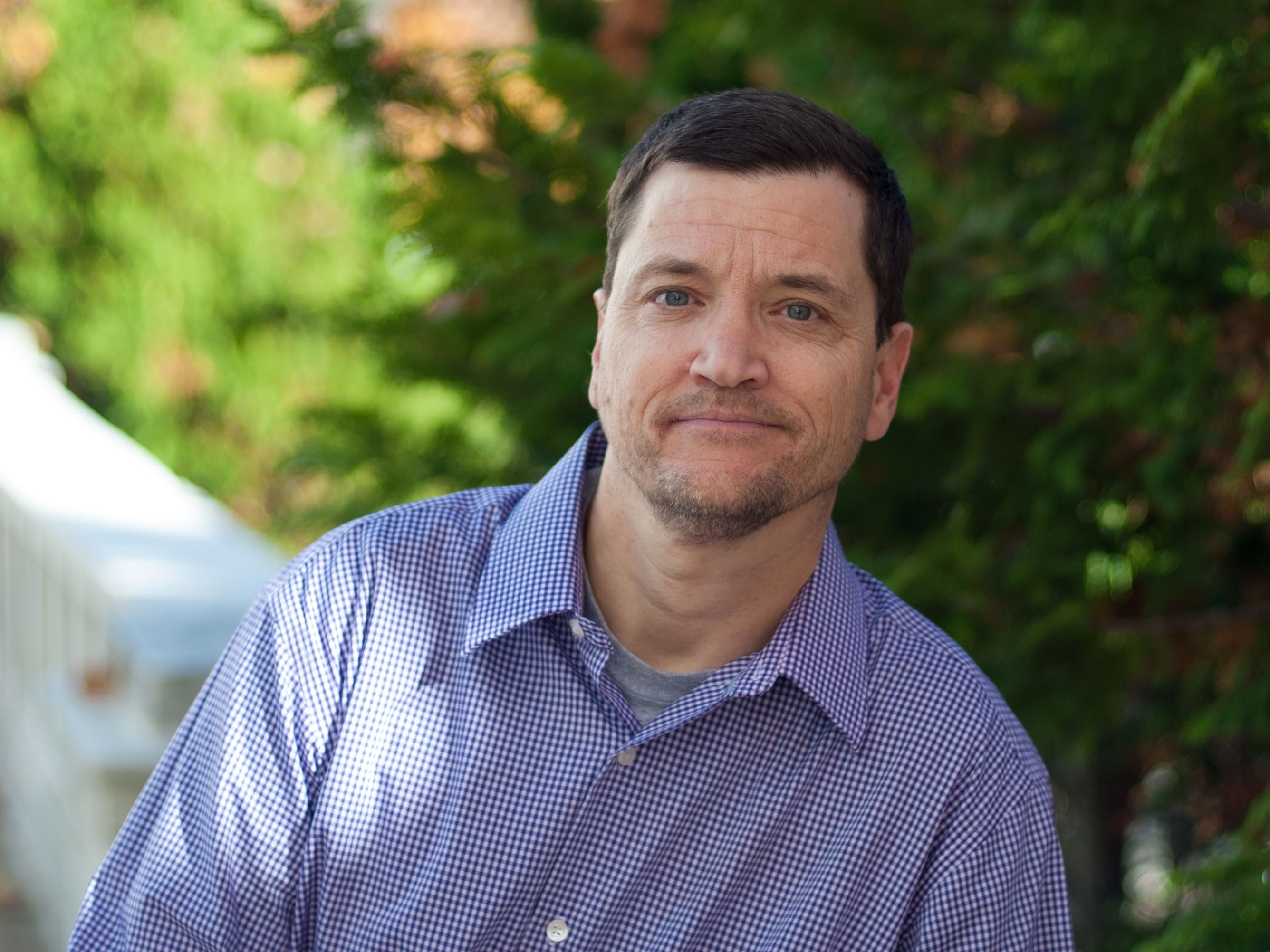
Steven Gygi, Ph.D.

Steven Gygi, Ph.D.

Professor of Cell Biology (HMS)
C-523C

Steven Gygi, Ph.D., received his Ph.D. from the University of Utah in Pharmacology and Toxicology performing small molecule mass spectrometry.  He went on to pursue postdoctoral work with Ruedi Aebersold at the University of Washington in 1996.  A revolution in biological mass spectrometry was occurring which allowed for the measurement of protein expression levels and a new field, Proteomics, was born.  In 2000, Dr. Gygi moved to Harvard Medical School and joined the Department of Cell Biology.  Currently, he is the faculty director of two MS core facilities (Taplin Biological MS Facility, and the Thermo Fisher Center for Multiplexed Proteomics—TCMP@HMS).

Research in the Gygi lab centers around developing and applying new technologies in the field of mass spectrometry-based proteomics.  These include the systematic and proteome-wide measurements of many protein properties including their expression levels, modification states, structure, localization, function, and interactions.  For example, the Gygi lab, together with the Harper lab at HMS, is creating a genome-scale map of the protein-protein interaction landscape in cells (termed BioPlex).  In addition, sample multiplexing techniques like Tandem Mass Tags (TMT) are being improved to allow up to 16 proteomics samples to be analyzed simultaneously using high resolution mass spectrometry.

Harvard Medical School

Dept. of Cell Biology, C-523B

240 Longwood Avenue

Boston, MA 02115

SR proteins function in coupling RNAP II transcription to pre-mRNA splicing.
Authors: Authors: Das R, Yu J, Zhang Z, Gygi MP, Krainer AR, Gygi SP, Reed R.
Mol Cell
View full abstract on Pubmed
Certain pairs of ubiquitin-conjugating enzymes (E2s) and ubiquitin-protein ligases (E3s) synthesize nondegradable forked ubiquitin chains containing all possible isopeptide linkages.
Authors: Authors: Kim HT, Kim KP, Lledias F, Kisselev AF, Scaglione KM, Skowyra D, Gygi SP, Goldberg AL.
J Biol Chem
View full abstract on Pubmed
Identification of protein components in in vivo human acquired enamel pellicle using LC-ESI-MS/MS.
Authors: Authors: Siqueira WL, Zhang W, Helmerhorst EJ, Gygi SP, Oppenheim FG.
J Proteome Res
View full abstract on Pubmed
Abraxas and RAP80 form a BRCA1 protein complex required for the DNA damage response.
Authors: Authors: Wang B, Matsuoka S, Ballif BA, Zhang D, Smogorzewska A, Gygi SP, Elledge SJ.
Science
View full abstract on Pubmed
ATM and ATR substrate analysis reveals extensive protein networks responsive to DNA damage.
Authors: Authors: Matsuoka S, Ballif BA, Smogorzewska A, McDonald ER, Hurov KE, Luo J, Bakalarski CE, Zhao Z, Solimini N, Lerenthal Y, Shiloh Y, Gygi SP, Elledge SJ.
Science
View full abstract on Pubmed
The tumor suppressor CYLD regulates entry into mitosis.
Authors: Authors: Stegmeier F, Sowa ME, Nalepa G, Gygi SP, Harper JW, Elledge SJ.
Proc Natl Acad Sci U S A
View full abstract on Pubmed
RNAi-dependent and -independent RNA turnover mechanisms contribute to heterochromatic gene silencing.
Authors: Authors: Bühler M, Haas W, Gygi SP, Moazed D.
Cell
View full abstract on Pubmed
Cdk1 coordinates cell-surface growth with the cell cycle.
Authors: Authors: McCusker D, Denison C, Anderson S, Egelhofer TA, Yates JR, Gygi SP, Kellogg DR.
Nat Cell Biol
View full abstract on Pubmed
Identification of the FANCI protein, a monoubiquitinated FANCD2 paralog required for DNA repair.
Authors: Authors: Smogorzewska A, Matsuoka S, Vinciguerra P, McDonald ER, Hurov KE, Luo J, Ballif BA, Gygi SP, Hofmann K, D'Andrea AD, Elledge SJ.
Cell
View full abstract on Pubmed
S. pombe LSD1 homologs regulate heterochromatin propagation and euchromatic gene transcription.
Authors: Authors: Lan F, Zaratiegui M, Villén J, Vaughn MW, Verdel A, Huarte M, Shi Y, Gygi SP, Moazed D, Martienssen RA, Shi Y.
Mol Cell
View full abstract on Pubmed