
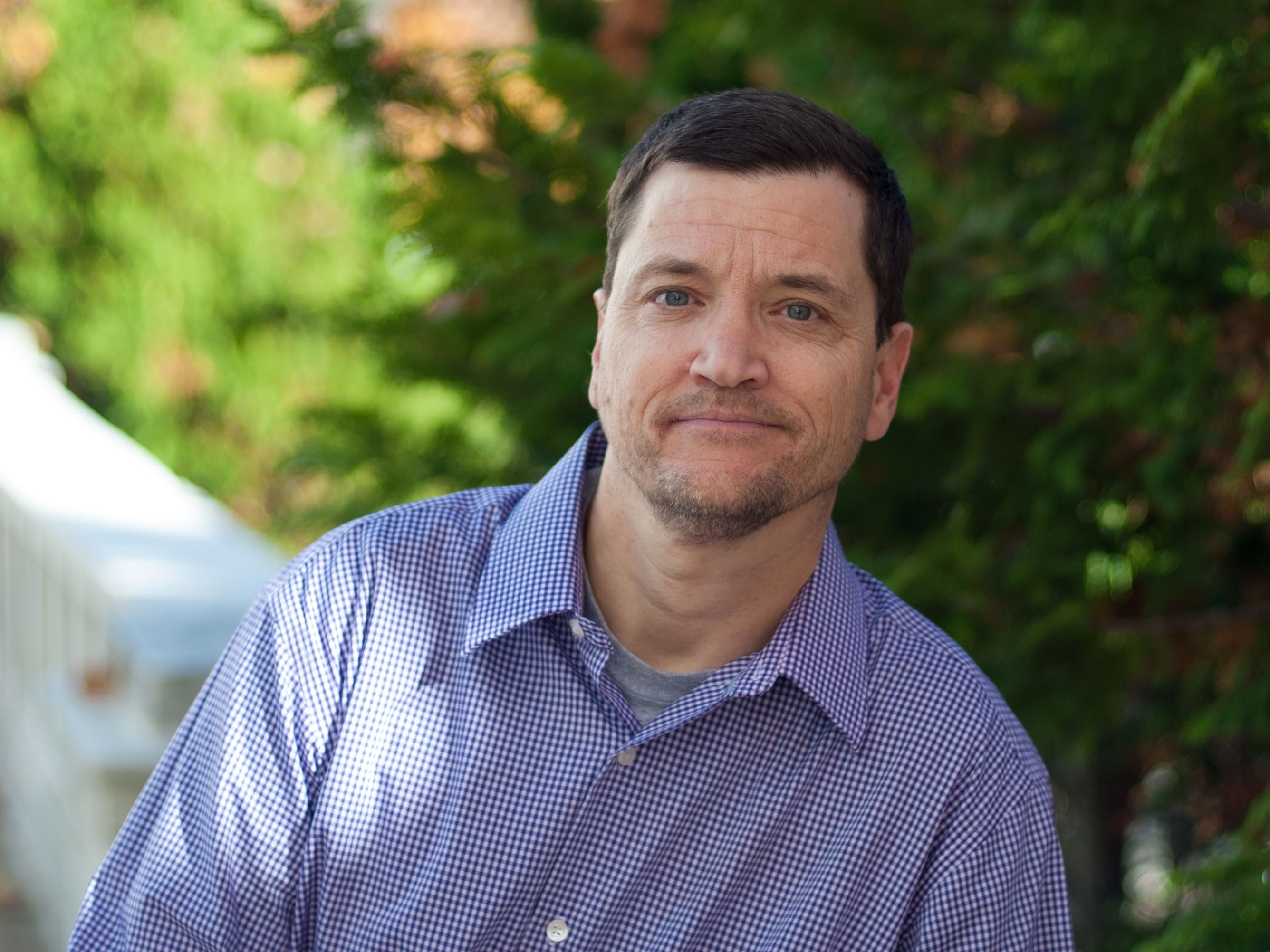
Steven Gygi, Ph.D.

Steven Gygi, Ph.D.

Professor of Cell Biology (HMS)
C-523C

Steven Gygi, Ph.D., received his Ph.D. from the University of Utah in Pharmacology and Toxicology performing small molecule mass spectrometry.  He went on to pursue postdoctoral work with Ruedi Aebersold at the University of Washington in 1996.  A revolution in biological mass spectrometry was occurring which allowed for the measurement of protein expression levels and a new field, Proteomics, was born.  In 2000, Dr. Gygi moved to Harvard Medical School and joined the Department of Cell Biology.  Currently, he is the faculty director of two MS core facilities (Taplin Biological MS Facility, and the Thermo Fisher Center for Multiplexed Proteomics—TCMP@HMS).

Research in the Gygi lab centers around developing and applying new technologies in the field of mass spectrometry-based proteomics.  These include the systematic and proteome-wide measurements of many protein properties including their expression levels, modification states, structure, localization, function, and interactions.  For example, the Gygi lab, together with the Harper lab at HMS, is creating a genome-scale map of the protein-protein interaction landscape in cells (termed BioPlex).  In addition, sample multiplexing techniques like Tandem Mass Tags (TMT) are being improved to allow up to 16 proteomics samples to be analyzed simultaneously using high resolution mass spectrometry.

Harvard Medical School

Dept. of Cell Biology, C-523B

240 Longwood Avenue

Boston, MA 02115

Network organization of the human autophagy system.
Authors: Authors: Behrends C, Sowa ME, Gygi SP, Harper JW.
Nature
View full abstract on Pubmed
The p38 MAPK pathway is essential for skeletogenesis and bone homeostasis in mice.
Authors: Authors: Greenblatt MB, Shim JH, Zou W, Sitara D, Schweitzer M, Hu D, Lotinun S, Sano Y, Baron R, Park JM, Arthur S, Xie M, Schneider MD, Zhai B, Gygi S, Davis R, Glimcher LH.
J Clin Invest
View full abstract on Pubmed
The conserved Bardet-Biedl syndrome proteins assemble a coat that traffics membrane proteins to cilia.
Authors: Authors: Jin H, White SR, Shida T, Schulz S, Aguiar M, Gygi SP, Bazan JF, Nachury MV.
Cell
View full abstract on Pubmed
Monoubiquitination of RPN10 regulates substrate recruitment to the proteasome.
Authors: Authors: Isasa M, Katz EJ, Kim W, Yugo V, González S, Kirkpatrick DS, Thomson TM, Finley D, Gygi SP, Crosas B.
Mol Cell
View full abstract on Pubmed
Gas-phase rearrangements do not affect site localization reliability in phosphoproteomics data sets.
Authors: Authors: Aguiar M, Haas W, Beausoleil SA, Rush J, Gygi SP.
J Proteome Res
View full abstract on Pubmed
Multiple mechanisms collectively regulate clathrin-mediated endocytosis of the epidermal growth factor receptor.
Authors: Authors: Goh LK, Huang F, Kim W, Gygi S, Sorkin A.
J Cell Biol
View full abstract on Pubmed
PIASy mediates SUMO-2/3 conjugation of poly(ADP-ribose) polymerase 1 (PARP1) on mitotic chromosomes.
Authors: Authors: Ryu H, Al-Ani G, Deckert K, Kirkpatrick D, Gygi SP, Dasso M, Azuma Y.
J Biol Chem
View full abstract on Pubmed
WDR20 regulates activity of the USP12 x UAF1 deubiquitinating enzyme complex.
Authors: Authors: Kee Y, Yang K, Cohn MA, Haas W, Gygi SP, D'Andrea AD.
J Biol Chem
View full abstract on Pubmed
Transcriptional role of cyclin D1 in development revealed by a genetic-proteomic screen.
Authors: Authors: Bienvenu F, Jirawatnotai S, Elias JE, Meyer CA, Mizeracka K, Marson A, Frampton GM, Cole MF, Odom DT, Odajima J, Geng Y, Zagozdzon A, Jecrois M, Young RA, Liu XS, Cepko CL, Gygi SP, Sicinski P.
Nature
View full abstract on Pubmed
Prokaryotic ubiquitin-like protein (Pup) proteome of Mycobacterium tuberculosis [corrected] .
Authors: Authors: Festa RA, McAllister F, Pearce MJ, Mintseris J, Burns KE, Gygi SP, Darwin KH.
PLoS One
View full abstract on Pubmed